Kynzora by KP Travels
Kynzoraby KP Travels
Home/Maharashtra Tour Packages/Ashtavinayak Tour Package
16+ Years Legacy • 1,00,000+ Happy PassengersAll 8 Temples CoveredChauffeur Waits at Every Temple

Ashtavinayak Darshan Tour from PuneEight Sacred Ganpati Temples in 2 Days / 1 Night

Maharashtra's most revered pilgrimage circuit, driven end to end from your Pune doorstep. Eight self-manifested Ganpati shrines acrossPune, Raigad and Ahmednagar districts, covered in the traditional darshan order over roughly650 to 700 kilometres, with a private air-conditioned vehicle and a chauffeur who waits for as long as your darshan takes.

Temples
8 GanpatiThe complete Ashtavinayak circuit
Duration
2D / 1N2 Days / 1 Night
Total Distance
650–700 kmRound trip from Pune
Vehicles
Sedan – TempoDzire, Ertiga, Crysta, Tempo
Package Price₹16,000 (2 Adults)2 Days / 1 Night · AC Swift Dzire, 1 AC hotel room, driver allowance, toll & parking included
Most Booked Yatra
Doorstep pickup in Pune Pre-assigned chauffeur Commercial T-permit vehicles 3-day version on request
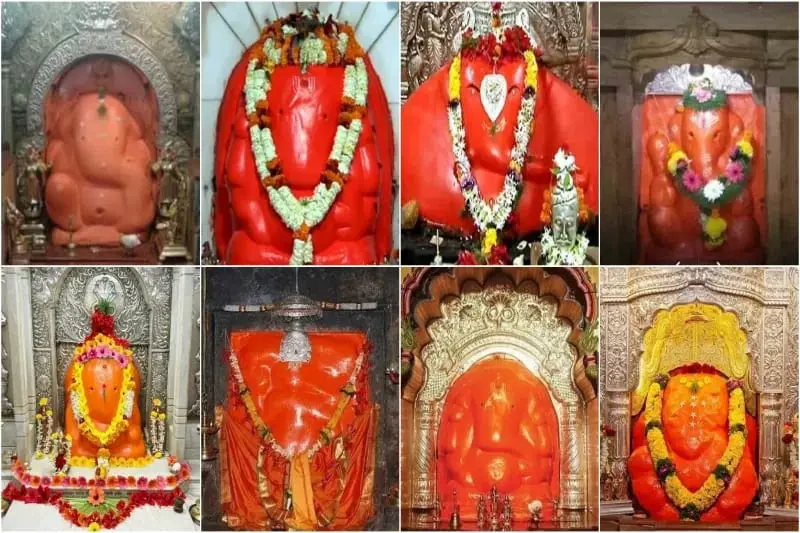
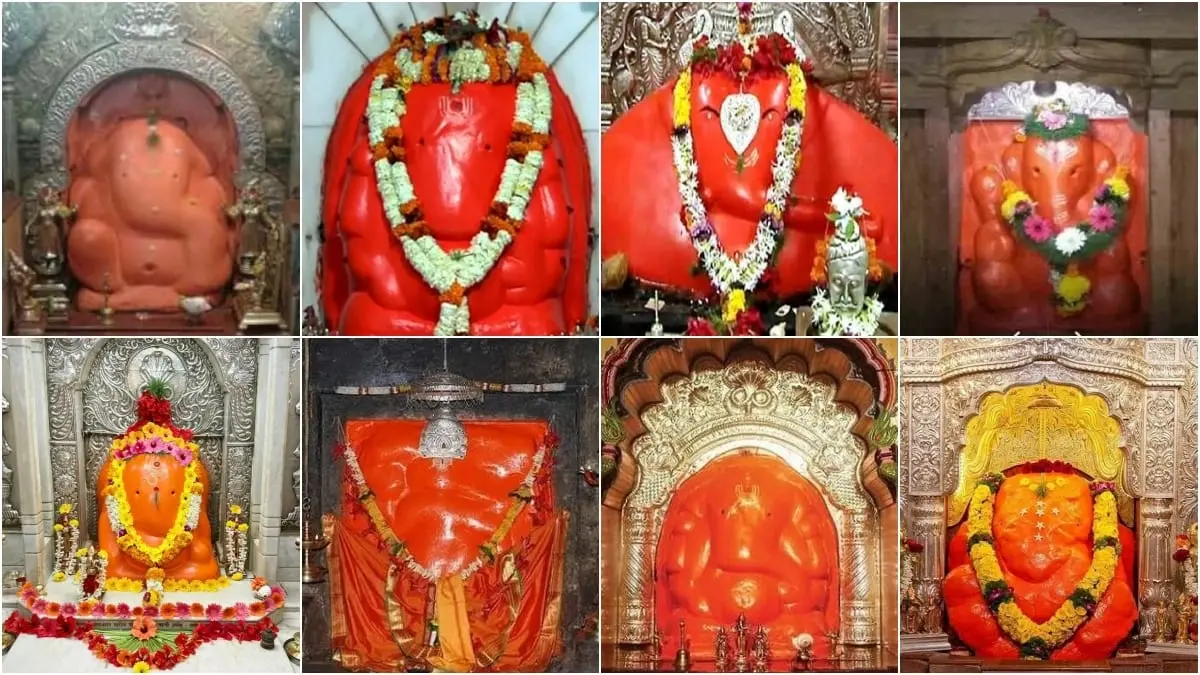
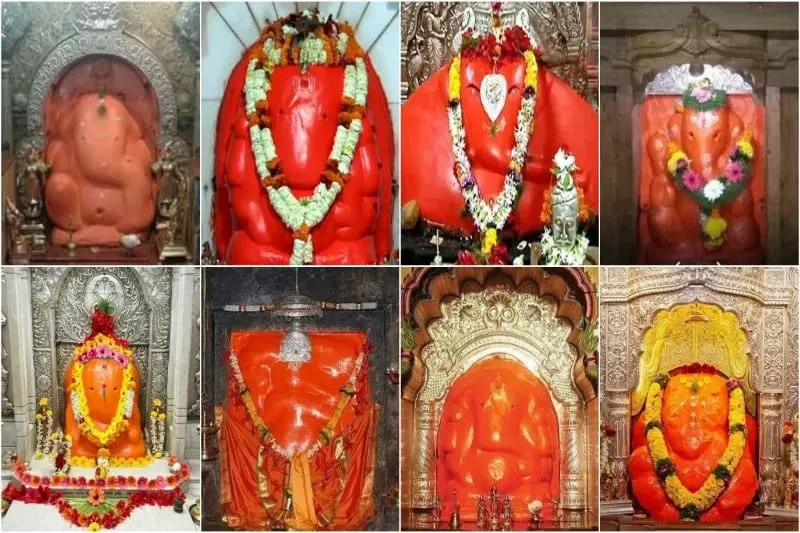
A traditional Ganpati temple shrine in Maharashtra, representative of the eight Ashtavinayak temples covered by KP Travels from Pune
The CircuitMorgaon · Siddhatek · Pali · Mahad · Theur · Lenyadri · Ozar · Ranjangaon
The Darshan Sequence

All Eight Ashtavinayak Temples, in Traditional Order

The Ashtavinayak are eight swayambhu — self-manifested — shrines of Ganesha scattered across three districts of western Maharashtra. The yatra is not a random set of temple visits: it follows a fixed order that begins at Morgaon and closes, by tradition, back at Morgaon. Below is the full sequence with each village, the significance of its deity and the approximate road distance from the previous stop.

  1. 01
    Day 1 · Morgaon

    Shri Mayureshwar (Moreshwar)

    Ganesha as Mayureshwar, seated on a peacock

    VillageMorgaon
    DistrictBaramati taluka, Pune district
    Distance from previousApprox. 60 km from Pune city
    Approx. drive time1.5 hrs

    Morgaon is the accepted starting point of the Ashtavinayak yatra and, by tradition, also its closing stop. The temple takes its name from the peacock — mor in Marathi — because Ganesha is believed to have ridden a peacock here while subduing the demon Sindhurasura. The shrine sits inside a fortified stone enclosure with four minarets at its corners and a large Nandi in front of the entrance, an unusual feature for a Ganpati temple. The idol has its trunk turned to the left, with the seated form facing east. Being the closest of the eight to Pune, Morgaon is where most yatras begin at first light.

  2. 02
    Day 1 · Siddhatek

    Shri Siddhivinayak

    The Vinayak who grants siddhi, or accomplishment

    VillageSiddhatek
    DistrictKarjat taluka, Ahmednagar district
    Distance from previousApprox. 100 km from Morgaon
    Approx. drive time2–2.5 hrs

    Siddhatek stands on the northern bank of the Bhima river, and the drive from Morgaon crosses open sugarcane country before reaching the temple hill. The name comes from the belief that Vishnu attained siddhi — spiritual accomplishment — at this spot after invoking Ganesha. This is the only one of the eight where the idol's trunk turns to the right, which devotees consider especially powerful and demanding of stricter observance. A full pradakshina, the circumambulation of the temple hillock, is a long walk and pilgrims often plan extra time for it. Of all eight, Siddhatek involves the longest single approach from the previous temple.

  3. 03
    Day 1 · Pali

    Shri Ballaleshwar

    The only Ashtavinayak named after a devotee

    VillagePali
    DistrictSudhagad taluka, Raigad district
    Distance from previousApprox. 200 km from Siddhatek
    Approx. drive time4.5–5 hrs

    Pali lies west of the Sahyadri ghats between the forts of Sarasgad and the Amba river valley, and this is the longest driving leg of the whole circuit. Ballaleshwar is the only Ganpati among the eight named after a devotee rather than a divine attribute — the boy Ballal, whose devotion was so complete that Ganesha took his name. The idol is unusually depicted in Brahmin form, seated on a stone throne, and the temple is aligned so that at sunrise around the winter solstice the light falls directly on the murti. The temple's inner sanctum is built in black stone in a cross shape, rebuilt in the early eighteenth century.

  4. 04
    Day 1 · Mahad

    Shri Varadvinayak

    The bestower of boons and abundance

    VillageMahad
    DistrictKhalapur taluka, Raigad district
    Distance from previousApprox. 25 km from Pali
    Approx. drive time45 min

    Mahad — the Khalapur village near the old Mumbai–Pune highway, not the larger Mahad town further south — is the shortest hop on the entire yatra, a comfortable half hour from Pali. Varad means a boon, and Ganesha is worshipped here as the deity who grants what is asked with sincerity. The temple is modest and village-scaled, with a simple sloping roof and a golden pinnacle, and pilgrims are traditionally permitted to enter the sanctum and offer respects directly to the idol rather than viewing from a distance. A nandadeep oil lamp inside the shrine is said by the temple's caretakers to have burned continuously since 1892.

  5. 05
    Day 2 · Theur

    Shri Chintamani

    The remover of anxiety and mental restlessness

    VillageTheur
    DistrictHaveli taluka, Pune district
    Distance from previousApprox. 90 km from Mahad
    Approx. drive time2.5 hrs

    Theur sits at the confluence of the Mula, Mutha and Bhima rivers, roughly 25 kilometres east of Pune, which makes it a natural first stop on the second day. The name Chintamani comes from the belief that Ganesha recovered the wish-fulfilling Chintamani jewel here and, in doing so, freed the sage Kapila of worldly craving — hence the deity's association with relieving chinta, or anxiety. The temple has a strong Peshwa connection: Madhavrao I of the Maratha confederacy was a devotee, and the wooden sabhamandap and much of the surviving structure date to that patronage. The complex is large and shaded, and the courtyard is one of the calmest on the circuit.

  6. 06
    Day 2 · Lenyadri

    Shri Girijatmaj

    Ganesha as the son of Girija, another name for Parvati

    VillageLenyadri
    DistrictJunnar taluka, Pune district
    Distance from previousApprox. 95 km from Theur
    Approx. drive time2.5 hrs

    Lenyadri is the most physically demanding of the eight and the most architecturally unusual. The shrine occupies one cave in a rock-cut group of Buddhist caves carved into a hillside near Junnar, reached by a stone stairway of roughly three hundred steps. There are no pillars supporting the sanctum roof — the entire hall is hewn from the hillside itself. The idol faces north, is carved into the rock wall rather than installed as a separate murti, and is believed to mark where Parvati performed penance to obtain Ganesha as her son. Pilgrims with limited mobility should plan for the climb, as there is no vehicular access to the cave level.

  7. 07
    Day 2 · Ozar

    Shri Vighnahar (Vighneshwar)

    The destroyer of obstacles

    VillageOzar
    DistrictJunnar taluka, Pune district
    Distance from previousApprox. 15 km from Lenyadri
    Approx. drive time30 min

    Ozar is barely fifteen minutes from Lenyadri on the banks of the Kukadi river, and the two are almost always visited on the same half day. Ganesha is worshipped here as Vighnahar, the one who removed the obstacles created by the demon Vighnasura — the reason any new venture in Maharashtra begins with an invocation to Vighnaharta. The temple is the most visually striking of the eight, enclosed by a high stone wall with deepmalas at the entrance and topped by a golden dome and spire. The idol's eyes are set with rubies and the forehead carries a diamond, and the sanctum is oriented east.

  8. 08
    Day 2 · Ranjangaon

    Shri Mahaganapati

    The most powerful form, invoked by Shiva himself

    VillageRanjangaon
    DistrictShirur taluka, Pune district
    Distance from previousApprox. 55 km from Ozar
    Approx. drive time1.5 hrs

    Ranjangaon lies on the Pune–Ahmednagar highway, which makes it the practical last stop before returning to Pune. It is believed that Shiva worshipped Ganesha at this place before setting out to defeat the demon Tripurasura, and the deity here is therefore called Mahaganapati, the great one. The temple faces east and is built so that at the equinoxes the rising sun falls directly on the idol — the structure is thought to date to the Peshwa period, built over an older shrine. The murti in the sanctum is seated and broad-browed, and local tradition holds that the original idol, called Mahotkat, lies in a chamber below the present one.

Completing the yatra back at Morgaon

Traditionally the Ashtavinayak yatra is considered complete only when the pilgrim returns to Shri Mayureshwar at Morgaon after the eighth darshan at Ranjangaon. That closing visit adds roughly 90 kilometres beyond Ranjangaon before the run home to Pune, and it does not sit comfortably inside a two-day plan that already covers eight temples. If it matters to your family, say so when you book and our tours desk will quote the extra kilometres or an additional day rather than squeeze it in.

2 Days / 1 Night

Day-Wise Itinerary from Pune

Four temples on each day, split so the long ghat crossing to Raigad falls on the first day and the Junnar temples on the second. Times are planning guidance, not guarantees — queues and temple schedules move the day around.

Tours desk: +91 97650 66565
Day 1

Pune → Morgaon → Siddhatek → Pali → Mahad

Approx. 390 km
  • Moreshwar, Morgaon
  • Siddhivinayak, Siddhatek
  • Ballaleshwar, Pali
  • Varadvinayak, Mahad

Your chauffeur reaches your Pune address well before sunrise — most families choose a 4:00 AM to 5:00 AM start so that Morgaon darshan is completed while the temple is still quiet. From Morgaon the route runs north-east to Siddhatek on the Bhima river, then turns west for the long haul across the ghats to Pali in Raigad. This is the heaviest driving day of the yatra and the reason an early departure matters. Varadvinayak at Mahad is a short half hour beyond Pali and is usually the last darshan of the day, after which you settle in for the night halt. Timings on this day depend on how long the queues run at Siddhatek and Pali, so treat the sequence as the plan rather than a clock.

Night halt after Varadvinayak darshan
Day 2

Theur → Lenyadri → Ozar → Ranjangaon → Pune

Approx. 280 km
  • Chintamani, Theur
  • Girijatmaj, Lenyadri
  • Vighnahar, Ozar
  • Mahaganapati, Ranjangaon

The second day returns east across the ghats to Theur, close to Pune, and then runs north into Junnar taluka for the Lenyadri caves. Allow extra time at Lenyadri for the stair climb to the cave shrine — it is the one stop on the circuit where the walking, not the driving, sets the pace. Ozar is a short drive on from Lenyadri, and Mahaganapati at Ranjangaon is the final darshan before your chauffeur brings you back to your Pune doorstep. Most groups are home by late evening, though a festival day or a long Lenyadri queue can push arrival later.

Drop at your Pune address the same evening
Temple courtyard on the Ashtavinayak pilgrimage route in Maharashtra

Want a gentler pace?

The same eight temples can be spread across three days, which cuts each day's driving down considerably and leaves room for unhurried darshan at Siddhatek and Lenyadri. It is the version we usually recommend when elderly parents or small children are travelling.

Ask for a 3-Day Plan

Completing the yatra at Morgaon

Tradition holds that the Ashtavinayak yatra is completed by returning to Moreshwar at Morgaon after the eighth darshan at Ranjangaon. That closing visit adds roughly 90 kilometres from Ranjangaon before the run back into Pune. It does not fit comfortably inside the 2 Days / 1 Night plan alongside eight temples, so if the return to Morgaon matters to you, tell our tours desk and we will quote the additional kilometres or an extra day.

Three-day and relaxed versions

The same eight temples spread over three days mean shorter driving stints, unhurried darshan and far less pressure at Lenyadri and Siddhatek. This suits elderly parents, families with young children and anyone who wants to sit in each temple courtyard rather than move straight from queue to car. The itinerary is rearranged and re-quoted on our per-kilometre rates.

Nearby add-ons

Because the circuit already passes close to several well-known destinations, groups frequently ask to attach Bhimashankar near Lenyadri, Lonavala and Khandala on the return from Pali, or Shirdi after Ranjangaon. Any of these can be added — share what you want covered and we rework the driving order before quoting.

Transparent Rate Card

Choose Your Vehicle for the Yatra

The published ₹16,000 (2 Adults) package is quoted on an air-conditioned Swift Dzire. Larger groups, and anyone who extends the itinerary beyond the confirmed route, are billed on our standard outstation per-kilometre rates. Driver allowance is ₹500 per day and night halt is ₹500 per night, with toll and parking extra.

4 Passengers

AC Sedan

Swift Dzire / Etios

Per km₹13 / km
Min. daily average250 km / day
Luggage2 large bags
Driver allowance ₹500 / dayNight halt ₹500 / night

Couples and a family of three or four on the standard 2D/1N yatra.

Book This Vehicle
6 Passengers

Prime SUV

Maruti Ertiga

Per km₹16 / km
Min. daily average250 km / day
Luggage3 large bags
Driver allowance ₹500 / dayNight halt ₹500 / night

Families of five or six who want more legroom on the long Pali leg.

Book This Vehicle
7 Passengers

Innova Crysta

Luxury SUV

Per km₹22 / km
Min. daily average250 km / day
Luggage4 large bags
Driver allowance ₹500 / dayNight halt ₹500 / night

The most comfortable choice for elderly parents across two long driving days.

Book This Vehicle
13+ Passengers

Tempo Traveller

13–26 Seater

Per km₹32 / km
Min. daily average300 km / day
LuggageLarge boot space
Driver allowance ₹500 / dayNight halt ₹500 / night

Extended family yatras, bhajani mandals and neighbourhood group darshan.

Book This Vehicle

Group and family yatras in a Tempo Traveller

Ashtavinayak is very often booked by an extended family, a bhajani mandal or an entire housing society together. A 13 to 26 seater air-conditioned Tempo Traveller at ₹32 per kilometre, with a 300 kilometre per day minimum average, keeps the whole group in one vehicle so nobody is separated across cars at eight different temple parking areas. Larger groups can also be quoted on multiple vehicles travelling in convoy with a single coordinator.

Pilgrims at a Maharashtra temple on the Ashtavinayak group yatra route
Written In Your Confirmation

What Is Included and What Is Not

Everything below appears in the quotation you receive before paying anything.

Inclusions

  • Private air-conditioned vehicle for the full circuit with the chauffeur on standby at every temple
  • Verified chauffeur who knows the Morgaon, Siddhatek, Pali and Junnar approach roads
  • Fuel for the entire yatra including all inter-temple transfers on the confirmed route
  • Driver allowance and night halt charges as stated in your written confirmation
  • Toll and parking on the confirmed route, as quoted to you before departure
  • One air-conditioned hotel room for the night halt, per the package published on our Maharashtra hub
  • Doorstep pickup and drop anywhere within Pune city limits
  • Darshan order planned around driving distance so the eight temples fit the days you have
  • A single point of contact at the Pune dispatch desk through both days of travel

Exclusions

  • Pooja, abhishek, archana and any paid ritual booked at a temple counter
  • Temple donations, offerings, prasad purchases and dakshina
  • Hotel accommodation beyond the one room stated above, and any room upgrade or extra night
  • All meals, snacks, tea and beverages for the travelling party
  • Priest arrangements, special-entry passes or queue-skipping of any kind, which we do not offer
  • Footwear stands, cloakroom charges and camera fees where a temple levies them
  • Kilometres driven beyond the confirmed itinerary, billed on the per-km rates above
  • Personal expenses, shopping, tips and anything not listed under inclusions

We deliberately do not quote pooja, abhishek or donation amounts. Those rates are set by each temple, differ from shrine to shrine and change from time to time, so they are paid by you at the temple's own counter.

Why Pune families book their yatra withKP Travels

A pilgrimage is not the trip to gamble on a cancelled cab. Sixteen years of Pune-based dispatch, a named chauffeur before you leave home, and a rate that does not move on a festival weekend.

16+ Years, 1,00,000+ Passengers

KP Travels has been dispatching road travel out of Pune for more than sixteen years, with over 1,00,000 happy passengers, long before app-based aggregators existed.

Chauffeurs Who Know the Circuit

The Siddhatek approach, the ghat crossing to Pali and the Junnar village roads are driven by our chauffeurs regularly, not read off a phone for the first time.

Written Quote, No Surge

Vehicle category, rate and allowances are confirmed in writing before payment. Ganesh Chaturthi, Sankashti and festival weekends do not change the agreed figure.

A Real Pune Control Room

Dispatch on +91 90116 16565 around the clock and a tours desk on +91 97650 66565, both reachable through the yatra.

Head Office

89/300 Laxmi Nagar, Near Parvati Police Station, Pune 411009, Maharashtra

Dispatch & Tours

+91 90116 16565(24/7 dispatch)
+91 97650 66565 (tours desk)

Track Record

16+ years of Pune road travel and more than 1,00,000 happy passengers across intercity, airport and pilgrimage routes.

Before You Leave

Practical Notes for the Ashtavinayak Yatra

Honest guidance from sixteen years of driving this circuit. None of it is a promise about temple timings — those belong to the temples, not to us.

Start before sunrise on Day 1

Day 1 carries roughly 390 kilometres across four temples and a ghat crossing. A 4:00 AM to 5:00 AM pickup from Pune is what makes it comfortable rather than rushed, and it puts you at Morgaon while the sanctum is still quiet.

Temple timings and queues vary

Every one of the eight temples keeps its own opening, aarti and closing schedule, and some close for a period in the afternoon. Queue lengths change entirely with the day of the week, Sankashti Chaturthi, Angarki Chaturthi, Ganesh Chaturthi and local festivals. We plan the driving order carefully, but no operator can promise a darshan time.

Lenyadri needs a climb

The Girijatmaj cave shrine is reached by roughly three hundred stone steps with no vehicle access to the top. If anyone in your group has knee trouble or limited mobility, factor in rest halts on the stairway or plan for them to wait at the base.

Carry cash for temple counters

Pooja counters, prasad stalls, footwear stands and cloakrooms in these villages often work in cash and digital payment can be unreliable in patches near Siddhatek and Lenyadri. Small denominations save time at every stop.

Dress and footwear

Modest traditional clothing is appropriate at all eight shrines, and footwear is removed outside every sanctum. Slip-on footwear is far more practical than laces when you are getting in and out of a vehicle at eight temples in two days.

Monsoon and summer

The ghat sections toward Pali and the stairway at Lenyadri are beautiful in the monsoon but slippery, and the drive is slower in heavy rain. Summer afternoons in Baramati and Shirur talukas are hot, which is another argument for early starts in both seasons.

Booking takes three steps

01

Share your dates and group size

Tell our tours desk your travel dates, the number of travellers and whether anyone in the group needs a gentler pace at Lenyadri.

02

Confirm the vehicle and plan

You receive the day-wise darshan order, the vehicle category and the rate with allowances in writing before any payment is made.

03

Chauffeur assigned before pickup

Driver name, phone number and vehicle registration are shared the evening before so you know exactly who is arriving at your door.

Planning a different Maharashtra circuit?See all Maharashtra tour packages →

Got Questions?

Ashtavinayak Yatra FAQs

Darshan order, distances, timings and vehicle choice for the eight-temple circuit from Pune.

What does the Ashtavinayak Darshan package from Pune include?

The package is a 2 Days / 1 Night circuit of all eight Ganpati temples priced at ₹16,000 (2 Adults), as published on our Maharashtra tour packages hub. It covers an air-conditioned Swift Dzire with a chauffeur on standby at every temple, one air-conditioned hotel room for the night halt, driver allowance, and toll and parking on the confirmed route. Pooja and abhishek charges, temple donations, meals and personal expenses are not included. Larger groups can be quoted on an Ertiga, Innova Crysta or Tempo Traveller instead.

Which are the eight Ashtavinayak temples and in what order are they visited?

The traditional darshan order is Moreshwar at Morgaon, Siddhivinayak at Siddhatek, Ballaleshwar at Pali, Varadvinayak at Mahad, Chintamani at Theur, Girijatmaj at Lenyadri, Vighnahar at Ozar and Mahaganapati at Ranjangaon. Five lie in Pune district, two in Raigad district and one in Ahmednagar district. Our Day 1 covers Morgaon, Siddhatek, Pali and Mahad, and Day 2 covers Theur, Lenyadri, Ozar and Ranjangaon before the drop back in Pune.

How many kilometres is the complete Ashtavinayak circuit from Pune?

Driven as a round trip from Pune, the eight temples work out to roughly 650 to 700 kilometres in total, with about 390 kilometres on the first day and about 280 on the second. The single longest stretch is Siddhatek to Pali, close to 200 kilometres across the Sahyadri ghats, which is why the first day starts before sunrise.

Can all eight temples really be covered in 2 Days and 1 Night?

Yes, and it is the most commonly booked version of the yatra. It works when the first day begins between 4:00 AM and 5:00 AM and the group keeps to the planned darshan order. It is a full, driving-heavy two days. If you would rather have unhurried darshan at each temple, ask our tours desk about spreading the same eight temples over three days on our per-kilometre rates.

Do you arrange pooja, abhishek or a priest at the temples?

No. We are a travel operator, not a temple intermediary. Any pooja, abhishek, archana or offering is arranged by you directly at the temple's own counter and paid there, at whatever rate that temple sets. We also do not offer special-entry passes or any form of queue skipping. What we do guarantee is that your vehicle and chauffeur wait at every temple for as long as your darshan takes.

What are the temple timings and how long will we wait in queue?

Each of the eight temples keeps its own opening, aarti and closing schedule, and several close for part of the afternoon. Waiting time depends entirely on the day — Sankashti Chaturthi, Angarki Chaturthi, Ganesh Chaturthi, weekends and local festivals can lengthen queues considerably, while an ordinary weekday morning may involve almost no wait. Nobody can promise a darshan time honestly, so we plan the driving order to give you the best chance at each stop and keep the vehicle flexible.

Is the Lenyadri temple difficult for elderly travellers?

Lenyadri is the one stop that demands physical effort. The Girijatmaj shrine is a rock-cut cave reached by roughly three hundred stone steps, and there is no vehicle access to the cave level. Elderly pilgrims manage it with rest halts along the stairway, but if that is not workable, the rest of the group can complete the darshan while others wait comfortably at the base with the chauffeur.

Which vehicle is best for a group family yatra?

For four travellers a Sedan at ₹13 per kilometre is sufficient. Five or six people are better served by an Ertiga at ₹16 per kilometre, and an Innova Crysta at ₹22 per kilometre is the most comfortable option for elderly parents across two long driving days. Extended families, bhajani mandals and neighbourhood groups of thirteen or more should book a 13 to 26 seater Tempo Traveller at ₹32 per kilometre with a 300 kilometre per day minimum average. Driver allowance is ₹500 per day and night halt is ₹500 per night, with toll and parking extra.

Book Your Ashtavinayak Darshan from Pune

Call our Pune dispatch room or message the tours desk on WhatsApp for a confirmed 2 Days / 1 Night yatra plan and a written quotation.