
Bhimashankar Jyotirlinga & Lonavala Scenic DriveDarshan in the morning, valley views by evening
Two very different halves of the same Sahyadri range in one chauffeur-driven trip from Pune — a Jyotirlinga darshan inside the Bhimashankar Wildlife Sanctuary, then theLonavala and Khandala viewpoint circuit with Bhushi Dam, Karla Caves and the chikki market on the way home.
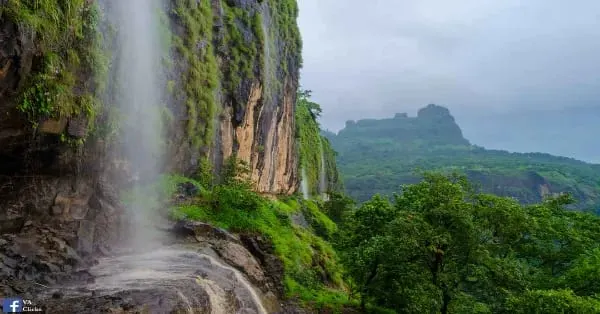
Quoted on request · Private AC cab with a ghat-experienced chauffeur
One Trip, Two Completely Different Halves
This is not a single sightseeing loop with temples added on. The morning belongs to a Jyotirlinga inside a protected forest, and the afternoon belongs to cliff-edge viewpoints and a chikki market. Each half has its own pace, its own footwear problem and its own set of stops.
Bhimashankar Jyotirlinga & the Wildlife Sanctuary
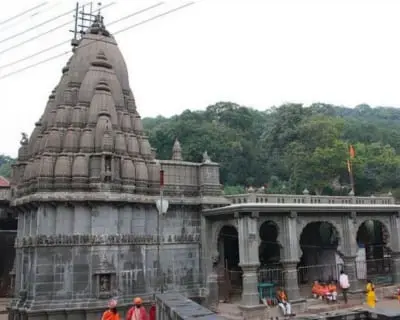
Bhimashankar sits roughly 110 to 125 kilometres from Pune in the Sahyadri range, a drive of about three to three and a half hours with the final stretch climbing through ghat curves. It is counted among the twelve Jyotirlingas and stands inside the Bhimashankar Wildlife Sanctuary, which also makes it the greenest Jyotirlinga approach in Maharashtra.
The main shrine, built in the Nagara style with later additions, is one of the twelve Jyotirlingas of Shiva. Darshan queue length varies a great deal with the day and the season — Mondays, Mahashivratri and the Shravan month are the busiest. Photography rules, mobile phone deposit and queue arrangements are set by the temple trust and can change without notice.
From the parking and market area, the temple is reached by a descent of several hundred stone steps, and the return is the same climb in reverse. There are shops and shade along the way. Travellers with knee trouble, elderly parents or very young children should plan a slow pace and extra rest halts — the descent is the easy half, the climb back is what tires people.
The temple lies within a protected sanctuary of dense Western Ghats forest. It is best known as the habitat of the Indian giant squirrel, the Shekru, which is the state animal of Maharashtra. Sightings are a matter of luck and quiet timing rather than something anybody can promise, and forest department rules apply throughout the area.
The Bhima river, a major tributary of the Krishna, rises in these hills near the temple, and the river is where both the temple and the surrounding region take their name from. The short walk around the origin point and the adjoining hill viewpoints is the quietest part of the visit, particularly before the mid-morning crowds arrive.
The temple courtyard is reached by descending a long flight of steps, then climbing the same steps back on the way out.
Lonavala, Khandala & the Sahyadri Viewpoints
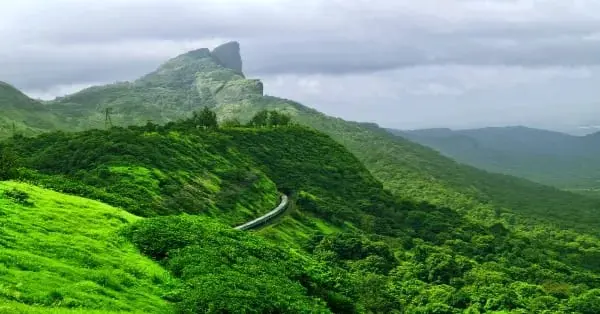
The second half swaps temple bells for valley wind. Lonavala and Khandala sit on the Pune–Mumbai corridor, close enough to Pune to be driven comfortably, and the cluster of viewpoints, the dam, the caves and the chikki shops make an easy contrast to a morning of queueing and steps.
The stepped spillway at Bhushi Dam is one of the most photographed monsoon spots in Maharashtra, but it is strictly seasonal — water flows over the steps only when the dam is spilling, generally in and just after the monsoon. Outside that window the steps are dry. Access is also restricted by the local authorities on days when the flow is considered unsafe, and those decisions are made on the spot.
Two of the best-known valley viewpoints around Lonavala. Tiger's Leap is a cliff-edge drop with a broad view over the valley floor, while Lion's Point looks west across the ranges and is popular for sunset. Both get crowded on weekends and the approach roads are narrow, so an early start makes a genuine difference to the experience.
A viewpoint on the Lonavala side looking out towards the Rajmachi fort ridge, quieter than the main circuit and an easy roadside halt. The full trek to the fort itself is a separate half-day activity and is not part of this drive — we can drop you at the trail head if you have planned that independently, but we do not arrange treks or trek guides.
The Karla rock-cut Buddhist caves sit above the highway near Lonavala and are reached by a flight of steps from the parking area. Entry tickets are collected at the site by the Archaeological Survey of India and are not part of your cab fare. On the way back, the Lonavala market strip is the traditional stop for chikki, fudge and local sweets.
Viewpoint visibility depends entirely on the weather. In heavy monsoon cloud you may be standing in fog rather than looking at a valley.
Both halves are driven by the same chauffeur in the same vehicle, with your luggage staying in the car through the day. You decide how much of each half you want — some travellers spend three hours at the temple and skip half the viewpoints, others do a quick darshan and stretch the Lonavala circuit into the evening.
Plan My SplitThe One-Day Return, Hour by Hour
A realistic plan rather than an optimistic one. Darshan queues and monsoon weather move these windows, so treat every timing as a range your chauffeur adjusts on the day.
- 0104:30 – 05:00
Doorstep pickup in Pune
Your chauffeur reaches your address anywhere in Pune, PCMC or near Pune Airport (PNQ). An early start is the single biggest factor in how good this day feels — it puts you at Bhimashankar before the main darshan rush and leaves the whole afternoon free for the hill station leg.
- 0205:00 – 08:15
Drive to Bhimashankar via the ghats
The route runs out of Pune and climbs steadily into the Sahyadris, with the last stretch a series of ghat curves through forest. One tea halt is standard. Passengers prone to motion sickness should sit forward and carry medication, because the final section is continuously winding.
- 0308:15 – 11:30
Darshan, temple steps and the Bhima origin
Park at the designated area, then descend the steps to the temple for darshan. After the shrine, the origin point of the Bhima river and the hill viewpoints behind the temple are a short, quiet walk. Queue time varies with the day, so treat this window as a range rather than a fixed slot.
- 0411:30 – 12:15
Sanctuary surroundings and breakfast
Simple local eateries around the temple market serve poha, misal and tea. This is also the best stretch of the day to walk slowly through the sanctuary edge and watch the canopy for the Shekru, the Indian giant squirrel, before the drive resumes.
- 0512:15 – 15:00
Transfer towards Lonavala and Khandala
The vehicle descends out of the Bhimashankar ghat and turns towards the Lonavala–Khandala belt. This is the longest single driving block of the day and a good time to rest, since the afternoon is spent on foot at viewpoints.
- 0615:00 – 17:30
Viewpoints, Bhushi Dam and Karla Caves
The chauffeur works through the cluster in the order that suits the day's traffic and weather — Tiger's Leap, Lion's Point, Rajmachi viewpoint, Bhushi Dam if it is flowing, and Karla Caves if you want the climb. You choose what to skip; nothing here is compulsory.
- 0717:30 – 18:15
Chikki market and sunset halt
The Lonavala market strip for chikki, fudge and local sweets, with a last sunset halt at a viewpoint if the light is holding. On clear evenings this is the best photograph of the whole day.
- 0818:15 – 20:30
Return drive and drop in Pune
A straightforward run back to your Pune address. Traffic on Sunday evenings and long weekends can add time, and our dispatch room keeps track of it so nobody is left guessing about the arrival hour.
Vehicles & Per-Kilometre Rates
There is no single flat price for this combined itinerary, because the kilometre count depends on your pickup point in Pune, the halts you keep and whether you take the night halt. It is quoted on request against our standard outstation rates below. Driver allowance ₹500 per day, night halt ₹500 per night. Toll and parking extra.
AC Sedan
Dzire / Etios
Couples and small families doing the one-day return version.
Prime SUV
Maruti Ertiga
Extra legroom for the long winding ghat stretches.
Innova Crysta
Luxury SUV
The most requested vehicle for ghat routes with elders on board.
Tempo Traveller
13–26 Seater
Temple groups, extended families and society trips.
Ghat driving is a skill, not a setting
The Bhimashankar approach and the Lonavala ghats are continuous curves with blind bends, hairpins and local traffic that stops without warning. Our chauffeurs work these Sahyadri roads through the year, including the monsoon, and they know where it is safe to overtake and where it simply is not.
Vehicles maintained for hill work
Brakes, tyres and wipers matter more on this route than on any expressway run. Every commercial T-permit vehicle we send out on a ghat itinerary is checked before dispatch, and air conditioning is expected to hold on a long climb.
Group travel on winding roads
Temple groups and large families usually take a Tempo Traveller. On continuously curving sections a larger vehicle is slower by nature, so we build extra time into group itineraries instead of pretending the timings are identical.
Comparing this against other Maharashtra circuits?See all Maharashtra tour packages →
What Is Included and What Is Not
Read this before you pay anything. Every line here is repeated in the written quotation our tours desk sends you.
Inclusions
Covered in your quoted fare
Private air-conditioned vehicle for the full itinerary with the chauffeur on standby at every halt Experienced Sahyadri chauffeur who drives ghat sections regularly, not a first-time visitor Doorstep pickup and drop anywhere in Pune, PCMC or near Pune Airport (PNQ) Fuel for the entire confirmed route, including the viewpoint-to-viewpoint repositioning Driver allowance and night halt charges exactly as stated in your written quotation Flexible halt order — the driving sequence is adjusted around darshan queues and weather on the day A single point of contact with the Pune dispatch desk for the whole trip
Exclusions
Paid directly by you
- –Temple donations, abhishek or any paid darshan arrangement at Bhimashankar
- –Karla Caves entry tickets and any other monument or viewpoint ticket collected at the site
- –Hotel stay, unless you specifically ask us to arrange it and it is quoted to you in writing
- –Meals, snacks, tea and bottled water for the travelling party
- –Toll and parking charges where not expressly stated in your confirmation
- –Guides, porters, palanquin or any assisted-carry arrangement on the temple steps
- –Personal expenses, shopping, tips and anything not listed under inclusions
Why pilgrims pick KP Travels for the ghats
A Pune travel house that has been arranging road journeys for sixteen years, with a named human answering the phone at every stage of your trip.
16+ Years of Dispatch
KP Travels has been running road travel out of Pune since long before app-based aggregators arrived, with over 1,00,000 happy passengers on the ledger.
Ghat-Road Chauffeurs
Drivers who work the Bhimashankar climb and the Lonavala ghats through the year and know where the blind curves and the safe halts actually are.
Written Quote, No Surge
You get the vehicle category, per-kilometre rate and allowances in writing before you pay. Long weekends and Shravan Mondays do not change the agreed figure.
Human Desk on Call
A real Pune control room on +91 90116 16565 and a tours desk on +91 97650 66565, reachable through the entire trip.
KP Travels · 89/300 Laxmi Nagar, Near Parvati Police Station, Pune 411009
Dispatch +91 90116 16565 · Tours desk +91 97650 66565
When to Go, and What the Ghats Are Like
The monsoon is the most beautiful season on this route and also the most demanding one. We would rather set that expectation now than have you disappointed at a fogged-in viewpoint.
June – September
MonsoonThis is when the Sahyadris look the way the photographs promise — waterfalls running off the rock faces, the forest saturated green and Bhushi Dam actually spilling over its steps. It is also the hardest driving window of the year. Ghat sections get thick fog that can cut visibility to a few metres, the road surface stays wet and slippery, and viewpoints are sometimes inside cloud with nothing to see. Our chauffeurs slow down in those conditions rather than keeping to a schedule, and we would rather reach an hour late than take a curve fast.
October – February
Post-monsoon & winterThe greenery is still holding through October and November, the air is clear and the valley views from Tiger's Leap and Lion's Point are at their most reliable. Mornings at Bhimashankar are cold and pleasant, and the temple steps are dry underfoot. Bhushi Dam is usually past its flow by the later part of this window. For a first visit with elders or children in the group, this is the window we recommend.
March – May
SummerVisibility is good and the roads are at their easiest, but the landscape turns dry and brown, the waterfalls are gone and Bhushi Dam has no water on the steps. Midday heat makes the temple step climb harder work than it looks. If you travel in this window, start very early and keep the walking to the cooler hours at either end of the day.
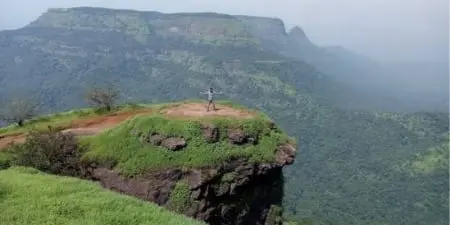
Beautiful, green and often inside a cloud
Monsoon Safety Notes
Fog on the ghats is common in the monsoon and in early winter mornings. If visibility drops, our chauffeur reduces speed and, if needed, waits it out at a safe halt rather than pushing through. Wet stone is the real hazard on this trip, not the road. The temple steps and the rocks around Bhushi Dam get genuinely slippery — closed shoes with grip are worth more than any other item you pack. Bhushi Dam is seasonal and access can be restricted by the local authorities on days when the flow is judged unsafe. Those orders are issued locally and we cannot guarantee entry. Never enter or cross flowing water at the dam or at any stream on the route. Levels can rise quickly after upstream rain, with no warning at the spot where you are standing. Mobile signal is patchy in parts of the sanctuary and on sections of the ghat. Share your itinerary with someone at home before you leave Pune. Carry a light rain jacket rather than an umbrella. The wind at the viewpoints makes umbrellas useless and sometimes unsafe.
Booking This Trip Takes Three Steps
Tell us your date and group
Share your travel date, pickup locality in Pune, number of passengers and whether you want the one-day return or the two-day version with a night halt.
Get a written quotation
Our tours desk replies with the vehicle category, the per-kilometre rate, driver allowance and night halt figures, plus the expected kilometre count for your plan.
Chauffeur assigned before pickup
Driver name, phone number and vehicle registration are shared ahead of the trip, so at 4:30 in the morning you know exactly which car is at your gate.
Bhimashankar & Lonavala Trip FAQs
Distance, darshan queues, temple steps, seasonal access at Bhushi Dam and how the fare is calculated.
How far is Bhimashankar from Pune and how long does the drive take?+
Bhimashankar is roughly 110 to 125 kilometres from Pune depending on the route your chauffeur takes, and the drive is usually about three to three and a half hours. The distance itself is modest, but the final stretch is a ghat climb with continuous curves, so the average speed drops sharply near the end. We recommend a 4:30 to 5:00 AM pickup for the one-day return version so that darshan is done before the main rush and the whole afternoon is free for Lonavala.
What is the duration and price of this Bhimashankar and Lonavala package?+
The duration is 1-Day Return or 2 Days / 1 Night, matching the hill-station listing on our Maharashtra tour packages hub. We do not publish a single flat price for the combined Bhimashankar and Lonavala itinerary, because the kilometre count changes with your pickup point in Pune, the halts you keep and whether you take the night halt. Instead it is quoted on request against our standard outstation rates: ₹13 per km for an AC Sedan, ₹16 per km for an Ertiga, ₹22 per km for an Innova Crysta (each with a 250 km per day minimum average) and ₹32 per km for a Tempo Traveller (300 km per day minimum average), with driver allowance ₹500 per day, night halt ₹500 per night, and toll and parking extra. Call the tours desk on +91 97650 66565 for a written figure before you pay anything.
How many steps are there at the Bhimashankar temple, and is it manageable for elders?+
The temple courtyard sits below the parking and market level, so you descend a long flight of stone steps to reach the shrine and climb the same flight on the way back. The descent is easy; the return climb is the part that tires people. Travellers with knee trouble, heart conditions or very young children should plan a slow pace with rest halts on the way up, and should consider avoiding the monsoon months when the stone is wet. We do not arrange palanquins or any assisted-carry service, and we would rather tell you that plainly than let you assume otherwise.
Will we definitely see the Indian giant squirrel in the sanctuary?+
No, and nobody can honestly promise it. The Bhimashankar Wildlife Sanctuary is a known habitat of the Indian giant squirrel, the Shekru, which is the state animal of Maharashtra, but sightings depend on luck, quiet and timing. Early morning in the forest around the temple gives you the best chance. Forest department rules apply throughout the sanctuary and should be followed, including on feeding and noise.
Is Bhushi Dam always flowing when we visit Lonavala?+
No. Bhushi Dam is strictly seasonal. Water flows over the stepped spillway only when the dam is spilling, which generally means the monsoon and the weeks just after it. Outside that window the steps are dry. Even in season, the local authorities restrict access on days when they judge the flow unsafe, and those decisions are taken on the spot. If the dam is closed or dry on your date, your chauffeur will suggest alternative halts nearby rather than waiting around.
Is the monsoon a safe time to do this trip?+
It is the most beautiful season and it is the most demanding one. Fog on the ghats can cut visibility to a few metres, the road surface stays wet, and stone steps and viewpoint rocks become slippery. We run the trip through the monsoon with chauffeurs who drive these ghats regularly, and their instruction is to slow down or wait at a safe halt rather than keep to a timetable. What you should bring is grip footwear and a rain jacket, and what you should accept is that a viewpoint may be inside a cloud on the day you stand there.
Can we combine this with other temples or extend the itinerary?+
Yes. Bhimashankar is one of the twelve Jyotirlingas and also features in our five-day Panch Jyotirlinga Maharashtra Yatra, so travellers who want the wider circuit often start there instead. Shorter extensions from this trip include the Ashtavinayak temples, Lohagad and Karla in the same belt, or a Khandala overnight before continuing towards Mumbai. Tell the tours desk on +91 97650 66565 what you want added and we will rework the driving order and re-quote the kilometres before you confirm.
Darshan and the Valley, in One Day
Tell us your date and pickup locality in Pune. Our tours desk sends back a written quotation with the vehicle, the per-kilometre rate and the allowances — usually within 15 minutes.