Kynzora by KP Travels
Kynzoraby KP Travels
Home/Maharashtra Tour Packages/Kaas Pathar Valley of Flowers
UNESCO World Natural Heritage16+ Years · 1,00,000+ PassengersWe do not sell forest e-passes

Kaas Pathar Valley of Flowers from PuneUNESCO Plateau near Satara · 2 Days / 1 Night

Kaas sits roughly 120 to 140 kilometres from Pune via Satara, about 3 to 3.5 hours on the highway and the west-of-town plateau road. Bloom istypically late August to early October — a living monsoon event, not a date we can guarantee. The rest of the year the plateau is grassland. We drive the vehicle; the forest department, not us, controls entry in season.

Distance
120–140 kmPune to Kaas via Satara
Bloom Window
Late Aug–OctTypically — never guaranteed
Duration
2D / 1N2 Days / 1 Night
Vehicles
Sedan – Tempo4 to 26 seaters available
₹17,000 (2 Adults) AC Swift Dzire + 1 AC hotel room Toll, parking & driver allowance
Wildflower meadow on a high plateau, representing the Kaas Pathar Valley of Flowers trip from Pune with KP Travels
2 Days / 1 Night · ₹17,000 (2 Adults)
Pune · Satara · Kaas Plateau

Bloom typically late August to early October — not a guaranteed date

Seasonal Honesty

A bloom calendar, then what you actually see

Kaas is marketed as a valley of flowers. It is a valley of flowers for a few weeks in a good monsoon year. The rest of the calendar it is a laterite grassland plateau, which is still a UNESCO landscape — just not the photograph on the brochure. The months below are typical. They are not a booking guarantee.

Typical year on the plateau

Bloom typically late August to early October. Peak colour is most often September.

PeakShoulderOff-season
JanGrassland
FebGrassland
MarDry plateau
AprDry plateau
MaySummer
JunMonsoon start
JulGreen grass
AugTypically late month
SepTypically peak
OctTypically early month
NovGrassland
DecGrassland
Season 01

Peak Bloom

Typically mid-September
What you actually see

This is the photograph people come for: a laterite plateau carpeted in short wildflowers — balsam, senecio, and the other monsoon annuals that make Kaas famous. Colour is dense underfoot, and the plateau looks like a garden rather than a grassland. It is also the busiest window, and forest-department timed entry is most likely to apply.

Peak is a weather outcome, not a calendar booking. A delayed monsoon, a dry spell, or an early fade can move it by a week or more. We never confirm flowers in writing.

Expect
  • The densest colour of the year, if the monsoon has cooperated
  • Timed-entry e-pass almost certainly required
  • Crowds, parking queues and a shorter walk window on the plateau
Keep in mind
  • Dates are typical, not promised — check the current season locally
  • E-passes sell out; we do not hold or sell them
  • Weekend mornings are the most congested
Season 02

Shoulder Bloom

Typically late August and early October
What you actually see

Patchy colour rather than a carpet. Some stretches of the plateau are in flower, others are still grass or already going to seed. The light is often softer, the paths quieter, and you still get the UNESCO landscape — just not the postcard density. For many regular visitors this is the more honest, more enjoyable window.

Shoulder is a coin-flip. Late August can be a green plateau with the first colour appearing, or it can already be vivid. Early October can still hold colour or can already look like ordinary grassland. Treat it as a scenic Satara trip that might also have flowers.

Expect
  • Uneven bloom — pockets of colour, not wall-to-wall
  • Fewer visitors than the September rush
  • E-pass rules may still apply; confirm on official channels
Keep in mind
  • Do not book this window expecting peak-carpet photographs
  • A late or early monsoon can skip the shoulder look entirely
  • Bring a rain jacket — August and October are still wet months
Season 03

Off-Season Grassland

Typically November through mid-August
What you actually see

A high laterite plateau of grass, rock and open sky. No flower carpet. What remains is the reason Kaas was listed as a World Natural Heritage site in the first place: a rare Western Ghats plateau ecosystem, long views toward the Satara hills, and a quiet walk. Thoseghar, Sajjangad and Satara city are the better reasons to make the drive in these months.

If someone sold you Kaas in January as a valley of flowers, they were selling a photograph from September. We will still take you — the plateau is worth standing on — but we will tell you in advance that you are visiting grassland.

Expect
  • Open grassland, rock outcrops and wide Sahyadri views
  • Usually no timed-entry e-pass outside the bloom window
  • Thoseghar, Sajjangad and Satara as the main day, Kaas as a halt
Keep in mind
  • There will not be a flower carpet. Plan the trip for the landscape
  • Summer months on the plateau are hot and largely bare
  • Monsoon months (June–July) are green and wet, not in bloom
On the Ground

The plateau, Vajrai, and optional Satara add-ons

Kaas and Vajrai are the two stops published with this package on the Maharashtra hub. Thoseghar Falls, Sajjangad and a Satara city evening are optional — ask for them at booking so the kilometres are in the plan, not discovered on the road.

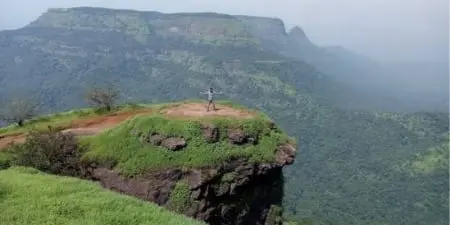
Open Sahyadri grassland and hills west of Satara, the landscape of Kaas Pathar outside peak bloom
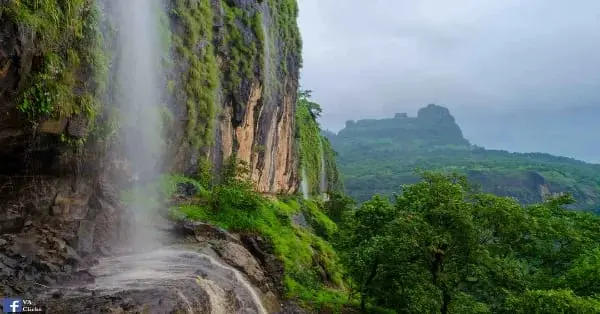
Monsoon waterfall in the Western Ghats, standing in for Vajrai and Thoseghar on the Kaas Pathar circuit

Kaas Plateau

About 25 km west of Satara
The reason you go

A laterite plateau in the Western Ghats, inscribed as part of the UNESCO World Natural Heritage cluster. In a good bloom year the short monsoon flora turns the rock into a flower meadow for a few weeks. The rest of the year it is grassland. Walking is on marked paths; leaving them damages a fragile ecosystem and is typically restricted by the forest department.

Timed entry may apply in bloom season · e-pass is not sold by us

Vajrai Waterfall

Near Kaas, west of Satara
On the hub itinerary

The Maharashtra hub lists Vajrai alongside the plateau, and it is the natural second halt on a Kaas day. The fall is at its strongest in and just after the monsoon, which is also when the approach can be wet and the spray heavy. Outside the rains it is a much quieter trickle. Footwear with grip matters more here than on the plateau itself.

Seasonal flow · strongest in the monsoon months

Optional add-ons

These are not automatic. They fit the 2 Days / 1 Night shape if you ask for them when you book.

Thoseghar Falls

About 25–30 km from Satara

A stepped waterfall in a forested gorge west of Satara, close enough to Kaas to combine on the same afternoon if your plateau slot is a morning one. Flow is monsoon-dependent. Viewing is from designated points; the gorge itself is not a swim stop, and local authorities close access when the water is considered unsafe.

Sajjangad

About 18 km from Satara

The hill fort associated with Samarth Ramdas, with a temple at the top and a steep approach. It is the most common cultural add-on when the plateau itself is off-season, and a gentle extra on a 2 Days / 1 Night Kaas trip. Entry arrangements are local and paid by you. The climb is the limiting factor for older travellers.

Satara city halt

On the Pune–Kaas road

Satara is the practical overnight base and the lunch halt on both days. We do not advertise a hotel name on this page — the one air-conditioned room included in the ₹17,000 package is confirmed in writing once your dates are held. Ajinkyatara fort and the town market are easy evening walks if you want them.

2 Days / 1 Night

Two days, one night — the shape that actually works

This is the duration published on the Maharashtra hub. A same-day return from Pune is possible on paper and exhausting in practice once you add a timed morning slot, a waterfall halt and the highway home. We plan the overnight.

Day 1

Pune to Satara, then Sajjangad or a quiet evening

About 110–120 km to Satara
107:00 – 08:00

Doorstep pickup in Pune

The chauffeur collects you from anywhere in Pune, PCMC or Pune Airport (PNQ). A morning start is enough for this trip — unlike a same-day temple run, there is no need to leave before dawn unless you have a timed Kaas slot on day one.

208:00 – 11:30

Pune to Satara via NH48

Roughly 110 to 120 kilometres on the Pune–Satara highway, about three hours depending on the Khed-Shivapur and Wai-bypass traffic. One tea halt is usual. Kaas itself sits a further 20 to 25 kilometres west of Satara, which is why the full Pune-to-plateau figure is 120 to 140 kilometres and 3 to 3.5 hours.

311:30 – 13:00

Lunch halt in Satara

Satara is the overnight base. Meals are your own expense. After lunch the vehicle continues either to Sajjangad or straight to hotel check-in, depending on what you asked for at booking.

413:00 – 16:30

Optional Sajjangad, or rest at the hotel

Sajjangad is about 18 kilometres from town and is the add-on that fits day one without colliding with a morning Kaas slot. If you would rather keep the afternoon quiet, the package hotel room is available for check-in. We do not name the property here; it is confirmed in writing for your dates.

5Evening

Night halt in Satara

The 2 Days / 1 Night figure includes one air-conditioned hotel room. Driver night halt is covered in the package as published on the Maharashtra hub. Tomorrow’s Kaas start time is set tonight if a forest timed-entry window applies.

Day 2

Kaas plateau, Vajrai, optional Thoseghar, return to Pune

Plateau loop, then ~120–140 km home
106:00 – 07:30

Drive out to Kaas

Bloom-season entry is typically a morning timed window issued by the Satara forest department. Your chauffeur plans the departure around the slot you hold — we do not issue that slot. Off-season, the same drive is simply an unhurried morning on the plateau road.

207:30 – 10:30

Kaas Pathar walk

Walking is on the marked paths. In peak bloom you are sharing those paths with a lot of other visitors; in the shoulder and off-season you have more of the plateau to yourself. Photography from the path is the usual activity. Leaving the trail is typically prohibited.

310:30 – 12:00

Vajrai Waterfall

The halt listed with this package on the Maharashtra hub. Strongest in the monsoon, quieter later in the year. A viewpoint stop rather than a long trek. Grip footwear if the rocks are wet.

412:00 – 13:30

Optional Thoseghar Falls, then lunch

Thoseghar sits on the same western side of Satara and is the add-on that fits after a morning plateau slot. If you skip it, lunch in Satara starts earlier and the return to Pune is more relaxed.

513:30 – 17:30

Return to Pune

The same NH48 corridor in reverse. Doorstep drop in Pune is typically late afternoon or early evening, depending on how long the plateau and the waterfall stops ran.

UNESCO World Natural Heritage plateau & Vajrai Waterfall. Includes AC Swift Dzire, 1 AC Hotel Room, toll, parking & driver allowance.

Transparent Rate Card

The hub package, then per-kilometre upgrades

The published figure is ₹17,000 (2 Adults) for a 2 Days / 1 Night AC Swift Dzire trip with one hotel room, toll, parking and driver allowance. Ertiga, Innova Crysta and Tempo Traveller trips are quoted on the KP Travels outstation card. Driver allowance ₹500 per day, night halt ₹500 per night. Toll and parking extra on per-kilometre trips.

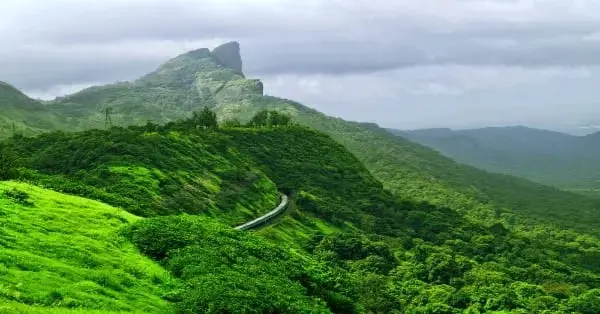
Highway drive through the Western Ghats on the Pune to Satara corridor toward Kaas Pathar
4 Passengers

AC Sedan

Dzire / Etios

Per km₹13 / km
Min. daily average250 km / day
Luggage2 large bags
Driver allowance ₹500 / dayNight halt ₹500 / night

The vehicle in the ₹17,000 hub package for two adults.

Request This Vehicle
6 Passengers

Prime SUV

Maruti Ertiga

Per km₹16 / km
Min. daily average250 km / day
Luggage3 large bags
Driver allowance ₹500 / dayNight halt ₹500 / night

Families who want extra seats on the Satara highway run.

Request This Vehicle
7 Passengers

Innova Crysta

Luxury SUV

Per km₹22 / km
Min. daily average250 km / day
Luggage4 large bags
Driver allowance ₹500 / dayNight halt ₹500 / night

The usual upgrade when senior family members are travelling.

Request This Vehicle
13+ Passengers

Tempo Traveller

13–26 Seater

Per km₹32 / km
Min. daily average300 km / day
LuggageLarge boot space
Driver allowance ₹500 / dayNight halt ₹500 / night

Photography clubs, college groups and extended-family trips.

Request This Vehicle
No Surprises

What is included and what is not

The forest e-pass is the line most operators blur. We do not sell it. Meals and entry tickets are yours. The hotel room is inside the ₹17,000 package; it is not inside a cab-only quote unless you ask for it.

Inclusions

Covered in the ₹17,000 hub figure

  • Private air-conditioned Swift Dzire (or the vehicle category you confirm) with a dedicated chauffeur for both days
  • Doorstep pickup and drop anywhere in Pune, PCMC or Pune Airport (PNQ)
  • One air-conditioned hotel room on the 2 Days / 1 Night package — the property is confirmed in writing for your dates
  • Toll, parking and driver allowance as published with this package on the Maharashtra hub
  • Fuel for the confirmed Pune–Satara–Kaas itinerary, including Vajrai
  • Optional Thoseghar or Sajjangad routing planned into the day when requested at booking
  • A single point of contact with the Pune dispatch desk for the whole journey

Exclusions

Paid directly by you

  • Forest-department timed-entry e-pass for Kaas — we do not sell, hold or arrange these. Check official Satara forest department channels
  • Hotel accommodation on cab-only or per-kilometre bookings, unless you specifically ask us to add a room
  • Breakfast, lunch, dinner, tea and mineral water for the travelling party
  • Entry tickets at Sajjangad, viewpoint charges, and any local fee at Thoseghar or Vajrai
  • Personal expenses, shopping, tips and anything not listed under inclusions
  • Additional kilometres beyond the confirmed itinerary, billed on the per-km rate card

Why book Kaas with KP Travels

A Pune travel house on the Satara road for sixteen years — and a desk that will tell you the plateau is grassland if you call in January.

16+ Years of Dispatch

KP Travels has been sending vehicles out of Pune for sixteen years, with over 1,00,000 happy passengers on record — including the Satara and Mahabaleshwar belt that Kaas sits in.

Honest About Bloom

We will not confirm flowers in a quotation. The plateau is a living monsoon system. You get a written fare for the vehicle and the night halt, not a guarantee of colour.

Drivers Who Know Satara

Chauffeurs who run the Pune–Satara highway and the west-of-town plateau roads, and who know where the parking actually is on a crowded September morning.

Human Desk on Call

A real Pune control room on +91 90116 16565 and a tours desk on +91 97650 66565, reachable through the whole trip.

One Pune office, the same desk on the road

Kaas is a Satara-belt run, not a mystery destination. The chauffeurs who do Mahabaleshwar and the Pune–Satara highway already know the west-of-town plateau roads, the parking pattern in September, and which waterfall approaches are open after a heavy night of rain. Over 1,00,000 passengers have travelled with KP Travels. The dispatch desk that plans your trip is the same desk you can call from the plateau road.

KP Travels · 89/300 Laxmi Nagar, Near Parvati Police Station, Pune 411009 · Dispatch +91 90116 16565 · Tours desk +91 97650 66565

Got Questions?

Kaas Pathar Tour FAQs

Bloom dates, forest e-pass, distance from Pune, and what the ₹17,000 figure actually covers.

When do the flowers bloom at Kaas Pathar?

Typically from late August to early October, with the densest colour often in September. That window moves with the monsoon — a delayed rain year can push bloom later, a dry spell can fade it early. Nothing on this page is a guaranteed bloom date. If flowers are the reason you are travelling, treat the dates as typical, check current-season reports from Satara closer to your trip, and accept that the plateau can be grassland on the day you arrive.

Do you sell or arrange the Kaas forest e-pass?

No. In bloom season the Satara forest department typically runs timed-entry / e-pass control on the plateau. KP Travels provides the vehicle, the chauffeur and the trip planning only. We do not sell e-passes, we do not hold a quota and we cannot walk you past the gate. You must check and book through official Satara forest department channels. If you do not hold a valid pass for a controlled day, we cannot take the vehicle onto the plateau.

How far is Kaas Pathar from Pune and how long is the drive?

Kaas is roughly 120 to 140 kilometres from Pune via Satara, a drive of about three to three and a half hours. Satara town itself is about 110 to 120 kilometres on NH48; the plateau sits a further 20 to 25 kilometres west of town. That is why the 2 Days / 1 Night format with a Satara night halt is the one published on our Maharashtra hub, rather than a rushed same-day return.

What is included in the ₹17,000 Kaas Pathar package?

The figure published on our Maharashtra tour packages hub is ₹17,000 for two adults on a 2 Days / 1 Night trip. It includes a private AC Swift Dzire, one air-conditioned hotel room, toll, parking and driver allowance. It does not include meals, monument or waterfall entry, or the forest e-pass. Larger vehicles (Ertiga, Innova Crysta, Tempo Traveller) are quoted on the outstation per-kilometre card: Sedan ₹13, Ertiga ₹16, Crysta ₹22 (250 km/day minimum) and Tempo ₹32 (300 km/day minimum), plus driver ₹500/day and night halt ₹500, with toll and parking extra.

Is Kaas worth visiting outside bloom season?

As a flower destination, no. Off-season the plateau is grassland and rock, not a carpet. As a Satara landscape trip with Thoseghar Falls, Sajjangad and a quiet plateau walk, yes — if that is what you actually want. We run the same 2 Days / 1 Night cab year-round and will tell you plainly which of those two trips you are booking.

Can Thoseghar Falls and Sajjangad be added?

Yes. Both are optional add-ons on the west-of-Satara side, close enough to combine with Kaas on a 2 Days / 1 Night plan. Sajjangad usually fits the first afternoon; Thoseghar usually fits after a morning plateau slot on day two. Tell the tours desk at booking so the driving order and the kilometres are planned, rather than adding them on the road. Entry tickets at Sajjangad and any local viewpoint charges remain your own.

What should a group of ten or more book?

A Tempo Traveller. We run 13 to 26 seater air-conditioned Tempo Travellers, which are the usual choice for photography clubs, college groups and extended families. Group trips are quoted on ₹32 per kilometre with a 300 kilometre per day minimum average, plus driver allowance of ₹500 per day and night halt of ₹500 per night, with toll and parking extra. The published ₹17,000 figure is the two-adult Swift Dzire package, not a group rate.

Plan Your Kaas Pathar Trip from Pune

Tell our Pune desk your travel dates, passenger count and whether you already hold a forest e-pass. You get a written fare — not a bloom guarantee.